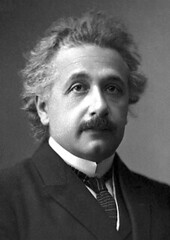
The Nobel prize in physics has been awarded to Francis Halzen for his pioneering work on neutrinos at the South Pole. This recognition underscores the significance of his research in the field of particle physics.
Overview of the Nobel Prize in Physics
The Nobel Prize in Physics is one of the most prestigious awards in the scientific community, recognizing groundbreaking contributions to our understanding of the physical world. Established by the will of Alfred Nobel in 1895, this award has honored many luminaries who have pushed the boundaries of scientific knowledge.
This year, the prize was awarded to Francis Halzen for his pioneering work on neutrinos at the South Pole. His research has opened new avenues for understanding these elusive particles, which play a crucial role in the universe’s structure and behavior.
Each recipient of the Nobel Prize in Physics receives a medal, a diploma, and a monetary award, symbolizing their exceptional achievements. The selection process is rigorous and involves extensive evaluation by experts in the field, ensuring that only the most deserving scientists are recognized.
- Recognizes significant contributions to physics
- Established by Alfred Nobel’s will in 1895
- Honors recipients with a medal and diploma
Francis Halzen’s Contributions
Francis Halzen, an esteemed physicist, has made significant contributions to the field of particle physics, particularly through his groundbreaking work on neutrinos. His research at the South Pole has transformed our understanding of these elusive particles, which are fundamental to the universe.
Halzen is best known for his role in the IceCube Neutrino Observatory, an ambitious project designed to detect neutrinos from cosmic sources. The observatory has opened new avenues for astrophysics and has provided valuable insights into cosmic events, such as supernovae and black hole collisions.
His dedication to unraveling the mysteries of the universe has not only advanced scientific knowledge but also inspired future generations of physicists. Halzen’s work exemplifies the spirit of the Nobel Prize in Physics, as it embodies the quest for discovery and the desire to understand the fundamental forces of nature.
Through his contributions, Halzen has solidified his place in the annals of scientific history, showcasing why the Nobel Prize in Physics remains one of the most prestigious awards in the field.
Importance of Neutrino Research
The Nobel Prize in Physics holds immense significance, particularly in the realm of neutrino research. Neutrinos, often referred to as “ghost particles,” are fundamental to our understanding of the universe. They are produced in various astrophysical processes, such as supernovae and nuclear reactions in stars, making their study crucial for astrophysics.
Francis Halzen’s work at the South Pole has opened new avenues for exploring these elusive particles. His contributions have not only advanced our knowledge of neutrinos but have also enhanced our understanding of the fundamental forces governing the cosmos. The importance of this research is underscored by several key factors:
- Understanding the Universe: Neutrinos provide insights into the early universe and the processes that shaped it.
- Particle Physics: Studying neutrinos helps physicists probe the Standard Model and beyond.
- Astrophysical Phenomena: Neutrinos are key to unraveling mysteries such as dark matter and supernova explosions.
Ultimately, recognizing advancements in neutrino research through the Nobel Prize in Physics highlights the award’s role in promoting groundbreaking scientific inquiry.
The South Pole’s Role in Physics
The South Pole has emerged as a pivotal location in the field of physics, particularly in the study of neutrinos. This remote region, with its unique environmental conditions, offers an unparalleled opportunity for researchers to explore the mysteries of these elusive particles. Francis Halzen’s groundbreaking work at the IceCube Neutrino Observatory is a prime example of how the South Pole contributes to our understanding of the universe.
Neutrinos, often referred to as “ghost particles,” travel through matter with minimal interaction, making them difficult to detect. However, the icy expanse of Antarctica serves as an ideal medium for capturing these particles. Halzen’s research not only enhances our comprehension of fundamental physics but also paves the way for advancements in astrophysics.
The recognition of Halzen’s achievements with the Nobel Prize in Physics underscores the significance of the South Pole in scientific discovery. This award highlights the global importance of collaborative research in extreme environments.
Previous Nobel Prize Winners
The Nobel Prize in Physics has a long and illustrious history, celebrating groundbreaking achievements that have transformed our understanding of the universe. Over the years, numerous esteemed scientists have been honored for their contributions, each leaving an indelible mark on the field.
Notable past winners include:
- Albert Einstein (1921) – Recognized for his discovery of the photoelectric effect, which laid the groundwork for quantum theory.
- Marie Curie (1903) – Awarded for her pioneering research on radioactivity, making her the first woman to win a Nobel Prize.
- Richard Feynman (1965) – Honored for his fundamental work in quantum electrodynamics, significantly influencing modern physics.
- Peter Higgs (2013) – Celebrated for the theoretical prediction of the Higgs boson, a pivotal element in particle physics.
The Nobel Prize in Physics continues to inspire new generations of scientists, demonstrating the relentless pursuit of knowledge and the quest to unravel the mysteries of the cosmos.
Impact on Future Research
The Nobel Prize in Physics has a profound impact on future research, inspiring generations of scientists to explore uncharted territories in their fields. The recognition of groundbreaking work, such as Francis Halzen’s contributions to neutrino research, underscores the significance of innovative thinking in advancing our understanding of the universe.
Winning this prestigious award not only elevates the recipient’s status but also draws attention to critical areas of study. As new discoveries emerge from places like the South Pole, where Halzen’s research is based, the scientific community is encouraged to delve deeper into fundamental questions.
Moreover, the Nobel Prize in Physics serves as a catalyst for funding and collaboration, allowing researchers to pursue ambitious projects that may have seemed unattainable. The ripple effect of such recognition fosters a culture of inquiry and exploration, ultimately pushing the boundaries of knowledge and paving the way for future breakthroughs.
- Inspires upcoming physicists
- Encourages interdisciplinary collaboration
- Attracts funding for research initiatives
Public Reaction to the Award
The announcement of the Nobel Prize in Physics awarded to Francis Halzen has sparked a wave of excitement and admiration across the scientific community and beyond. Researchers, students, and enthusiasts alike are celebrating this recognition of groundbreaking work in neutrino research, which has long been a subject of fascination.
Social media platforms are abuzz with reactions, as many highlight the significance of Halzen’s contributions to understanding the universe. Comments range from expressions of pride in scientific achievements to discussions about the implications of neutrino studies for future research.
In addition to honoring Halzen, this accolade is seen as a testament to the importance of collaborative efforts in science, particularly in challenging environments like the South Pole. Many agree that the Nobel Prize in Physics serves not just as an award, but as an inspiration for upcoming physicists to pursue innovative ideas and research that could reshape our understanding of the cosmos.
- Excitement within the scientific community
- Social media reactions highlighting significance
- Inspiration for future research efforts
Conclusion and Significance
In conclusion, the Nobel Prize in Physics stands as a pinnacle of achievement in the scientific community, and this year’s recognition of Francis Halzen highlights the importance of innovative research in neutrino studies. The award not only celebrates Halzen’s groundbreaking work at the South Pole but also emphasizes the significance of exploring the universe’s fundamental particles.
The impact of the Nobel Prize in Physics extends beyond individual accomplishments; it inspires future generations of scientists to pursue questions that challenge our understanding of the cosmos. The recognition of neutrino research is particularly important, as it opens new avenues for exploration in both astrophysics and particle physics.
As public interest in science continues to grow, awards like the Nobel Prize in Physics play a crucial role in fostering enthusiasm and support for scientific endeavors. Ultimately, the recognition of such vital work encourages collaboration and innovation, ensuring that the quest for knowledge remains at the forefront of human achievement.
By aeroman3 via Openverse
Sources
The Guardian · Nobel Prize in Physics
Australia A tour of India: Is it the Best Cricket Experience? · Gold Rate Today: The Best Live Updates You Need · Nasdaq record high: Smart traders eye oil and yields
1 thought on “Nobel prize in physics: What makes it the best award ever?”