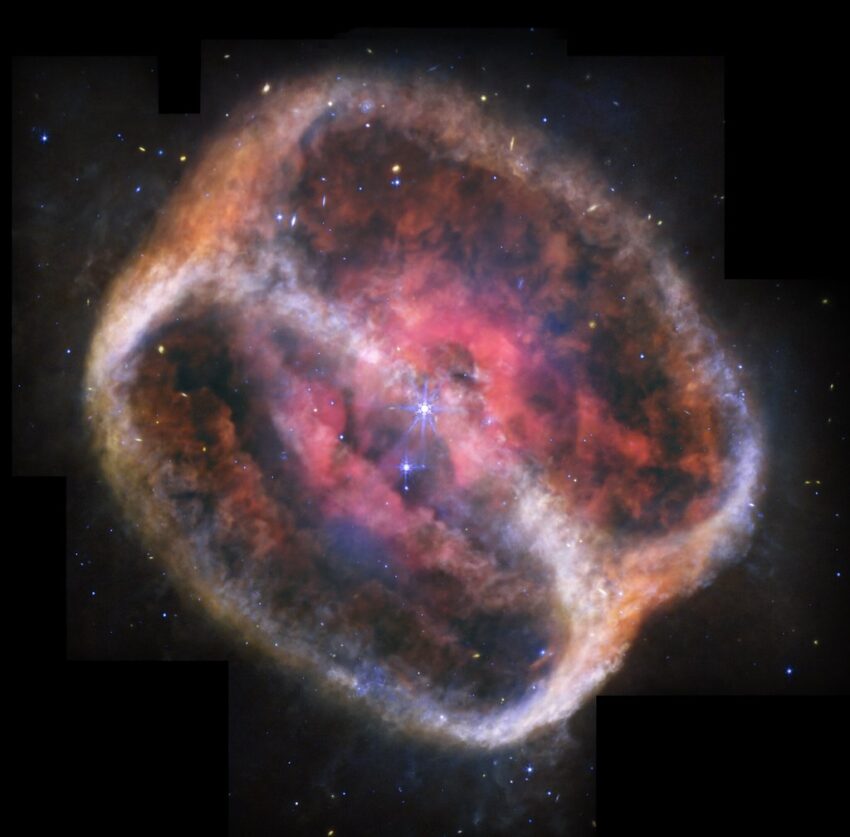
Dying stars black holes are a fascinating topic in astrophysics. Recent studies suggest that these stars may make choices based on neutrino ‘flavor’, leading to either a black hole or a supernova explosion.
What Are Dying Stars?
Dying stars are the remnants of massive stars that have exhausted their nuclear fuel. As they reach the end of their life cycle, they undergo significant changes, leading to two possible outcomes: they may either collapse into black holes or explode as supernovae. The fate of a dying star is determined by a variety of factors, including its mass and the conditions in its core.
During this transition, the processes occurring within the star are complex. A key aspect is the emission of neutrinos, which are elusive particles that can provide insights into the star’s final stages. Recent studies suggest that the ‘flavor’ of these neutrinos may influence whether a star ends its life as a black hole or as a spectacular supernova explosion.
The implications of these findings are profound, as they challenge our understanding of stellar evolution and the mechanisms that govern the universe. Researchers continue to investigate how these processes interact, shedding light on the mysteries surrounding dying stars and their transformation into black holes or supernovae.
Understanding Neutrino Flavors
In recent studies, scientists have been exploring the concept of neutrino flavors and their potential role in the fate of dying stars. Neutrinos are subatomic particles that come in three distinct types, or flavors: electron, muon, and tau. These flavors may influence whether a dying star ultimately collapses into a black hole or explodes as a supernova.
The process begins when a massive star exhausts its nuclear fuel. As the core collapses, it produces an intense burst of neutrinos. Researchers believe that the different flavors of these neutrinos can interact differently with the surrounding matter, potentially leading to different outcomes.
- Black Holes: When a star’s core collapses without enough energy to expel the outer layers, it can lead to the formation of a black hole.
- Supernovae: Conversely, if the neutrino interactions provide sufficient energy to the outer layers, the star may explode as a supernova.
This intriguing relationship between neutrino flavors and the final fate of dying stars offers new insights into the complex processes that govern the universe.
The Fate of Dying Stars
The fate of dying stars is a subject of intense research, particularly in the context of how they ultimately transition into black holes or explode as supernovae. Recent studies suggest that this outcome may be influenced by the characteristics of neutrinos produced during the star’s final moments.
When a massive star exhausts its nuclear fuel, it undergoes a dramatic transformation. The star’s core collapses under gravity, and the resulting conditions dictate whether it will form a black hole or lead to a supernova explosion. Scientists have identified two primary paths:
- Black Holes: If the core remains sufficiently massive after the collapse, the gravitational pull can become so intense that not even light can escape, leading to the formation of a black hole.
- Supernovae: Conversely, if the core’s mass is below a critical threshold, the outer layers may be expelled in a violent explosion, resulting in a supernova.
This intriguing interplay between dying stars and their ultimate fate raises questions about the role of neutrino ‘flavors’ in this cosmic decision-making process.
Black Holes vs. Supernovae
The fate of dying stars often leads to a critical decision: will they ultimately become a black hole or explode as a supernova? Recent research has suggested that this choice may hinge on the behavior of neutrinos during the star’s final moments.
When a massive star exhausts its nuclear fuel, it undergoes a dramatic collapse. The core’s density increases, and this is where the interplay of neutrinos becomes significant. Scientists propose that the type, or flavor, of neutrinos produced can influence whether the star will implode into a black hole or eject its outer layers in a spectacular supernova.
- Black Holes: Formed when the core collapses beyond a critical point, leading to a singularity.
- Supernovae: Result from the outward explosion of materials, often leaving behind neutron stars or black holes.
Understanding how dying stars choose between these two outcomes not only sheds light on cosmic evolution but also helps scientists explore the fundamental properties of matter and energy in the universe.
Recent Research Findings
Recent research has provided intriguing insights into the choices that dying stars make as they reach the end of their lifecycle. Scientists have discovered that the fate of these stars, whether they become black holes or explode as supernovae, may be influenced by the behavior of neutrinos. Neutrinos, often regarded as elusive particles, play a crucial role in the processes occurring within a dying star.
In a recent study, researchers observed that the flavor of neutrinos emitted during a star’s collapse could determine its ultimate fate:
- Black Holes: Stars with certain neutrino flavors are more likely to form black holes, a result of their collapse under gravitational forces.
- Supernovae: Conversely, other flavors may trigger a powerful explosion, leading to a supernova event.
This groundbreaking finding suggests that the interactions of neutrinos can influence the dramatic transformation of dying stars into black holes or supernovae. As scientists continue to explore these mechanisms, the relationship between neutrinos and the fate of dying stars remains a compelling area of study in astrophysics.
Implications for Astrophysics
The recent discoveries regarding dying stars and their potential transitions into black holes or supernovae have significant implications for astrophysics. Understanding how these celestial bodies make their choices sheds light on fundamental processes that govern the universe.
Researchers have proposed that the type of neutrinos emitted during the final stages of a star’s life may influence whether the star ends as a black hole or a supernova. This connection suggests that the behavior of these elusive particles could play a critical role in determining the fate of dying stars.
Moreover, this knowledge may help scientists refine their models of stellar evolution. By examining the interactions of neutrinos, astrophysicists can better predict the lifecycle of stars and the mechanisms behind the formation of black holes. Key implications include:
- Improved understanding of the universe’s mass distribution.
- Insights into the gravitational waves produced during stellar collapse.
- Enhanced models for the synthesis of heavy elements in supernovae.
Ultimately, the relationship between dying stars, black holes, and neutrinos could reshape our comprehension of cosmic phenomena.
Recent studies suggest that dying stars black holes may form under specific conditions that favor gravitational collapse. Conversely, the explosive nature of some dying stars black holes can lead to spectacular supernova events, shedding light on their final moments.
By James Webb Space Telescope via Openverse
Where this came from
County Championship Division Two: Best Commentary Insights · Ayurveda Day celebration: Best Proven Practices for Wellness · Is PVA PVP polymer blend the Best Solution for Membranes?
1 thought on “Are Dying Stars Choosing Black Holes or Supernova?”