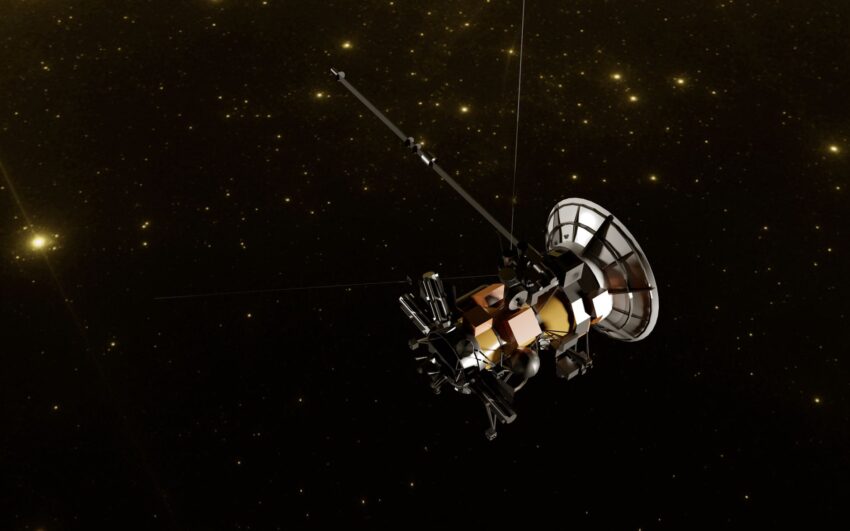
The Voyager 1 milestone is set to occur on Nov. 18, marking a remarkable achievement in NASA’s space exploration history.
What is the Voyager 1 milestone?
The Voyager 1 milestone marks a significant achievement in humanity’s exploration of the cosmos. As of November 18, 2023, NASA’s Voyager 1 spacecraft is set to cross the historic threshold of one light-day from Earth, a distance that equates to approximately 8.6 billion miles. This remarkable journey began in 1977, when Voyager 1 was launched to study the outer planets of our solar system.
Over the decades, Voyager 1 has provided invaluable data about Jupiter, Saturn, and their moons, vastly expanding our understanding of these distant worlds. Its instruments have transmitted stunning images and vital scientific information, helping to reshape our knowledge of the solar system.
Now, as it approaches this new milestone, Voyager 1 continues to send back data from the interstellar medium, the region beyond the influence of our Sun. This achievement not only symbolizes human ingenuity and persistence but also serves as a testament to our desire to explore the unknown. As the spacecraft travels further into space, it carries with it messages from Earth, representing humanity’s hope and curiosity about the universe.
History of Voyager 1
The journey of Voyager 1 began on September 5, 1977, when it was launched by NASA with the primary mission of exploring the outer planets of our solar system. The spacecraft made remarkable discoveries during its encounters with Jupiter and Saturn, sending back stunning images and valuable scientific data that reshaped our understanding of these gas giants.
After completing its primary mission, Voyager 1 continued its voyage into interstellar space, becoming the first human-made object to do so. In 2012, it crossed the heliopause, the boundary where the solar wind from the Sun meets the interstellar medium, marking a significant achievement in space exploration.
As Voyager 1 approaches its next milestone, crossing one light-day from Earth on November 18, it reaffirms its status as a monumental feat in human ingenuity. This Voyager 1 milestone is not just a marker of distance, but also a testament to the endurance of human exploration. As scientists continue to study the data received from the spacecraft, it opens new avenues of understanding about the universe beyond our solar system.
Significance of crossing one light-day
The significance of crossing one light-day is monumental in the context of space exploration and the Voyager 1 milestone. This achievement not only highlights the incredible distance Voyager 1 has traveled since its launch in 1977 but also serves as a testament to human ingenuity and the quest for knowledge beyond our planet.
In practical terms, crossing a light-day means that Voyager 1 is now over 8.3 billion kilometers away from Earth. This distance represents a major boundary in our understanding of the cosmos, as it illustrates the capability of human-made objects to venture into the far reaches of space.
The implications of this milestone are profound:
- Scientific Discovery: Voyager 1 continues to send back valuable data about interstellar space, enriching our understanding of the universe.
- Technological Achievement: The mission showcases the advancements in technology that have allowed such a long-duration journey.
- Inspiration: This milestone serves as an inspiration for future generations of scientists and explorers.
As Voyager 1 continues its journey, each milestone, including this one, deepens our connection with the universe and our place within it.
Upcoming events for Voyager 1
As the Voyager 1 milestone approaches, space enthusiasts and scientists alike are eagerly anticipating several upcoming events that will mark this significant achievement in space exploration. On November 18, 2023, Voyager 1 will officially cross the historic one light-day milestone, a momentous occasion that underscores its journey beyond our solar system.
In the lead-up to this event, NASA will host a series of educational webinars and live streams to engage the public. These events will feature:
- Expert Panel Discussions: Leading scientists will discuss the implications of Voyager 1’s journey and its contributions to our understanding of the universe.
- Interactive Q&A Sessions: Participants will have the opportunity to ask questions about Voyager 1’s mission and future prospects.
- Live Social Media Updates: Followers can stay informed in real-time as Voyager 1 approaches this landmark milestone.
These events not only celebrate the Voyager 1 milestone but also aim to inspire the next generation of explorers. As it continues to transmit data from interstellar space, Voyager 1 remains a symbol of human curiosity and innovation.
How Voyager 1 continues to send data
As Voyager 1 approaches its one light-day milestone, it continues to send back invaluable data that enriches our understanding of the cosmos. Launched in 1977, this spacecraft has journeyed farther from Earth than any other human-made object, and its ability to transmit information back to mission control at NASA remains a testament to human ingenuity.
Despite being over 14 billion miles away, Voyager 1 sends data about cosmic rays, solar wind, and the interstellar medium, which are essential for scientists studying the outer reaches of our solar system and beyond. The following aspects highlight how Voyager 1 continues to make significant contributions:
- Cosmic Ray Measurements: Voyager 1 helps scientists understand the intensity and origin of cosmic rays, which can affect both spacecraft and astronauts.
- Magnetic Field Data: The spacecraft provides critical insights into the magnetic environment of interstellar space.
- Solar Wind Analysis: Voyager 1 measures the solar wind’s interaction with the interstellar medium, offering clues about the solar system’s boundary.
The Voyager 1 milestone reflects not only a technical achievement but also an ongoing mission that continues to inspire curiosity about the universe.
Challenges faced by Voyager 1
The journey of Voyager 1 has not been without its challenges, especially as it approaches the Voyager 1 milestone of crossing one light-day from Earth. Launched in 1977, the spacecraft has faced numerous obstacles during its unprecedented expedition through the depths of space.
One significant challenge involved maintaining its communication systems. Over the decades, the distance between Voyager 1 and Earth has increased dramatically, making it difficult to send and receive signals. The spacecraft’s power supply has also dwindled, necessitating careful management of its energy resources to ensure continued operation.
Furthermore, Voyager 1 encounters various cosmic phenomena, including radiation from the solar wind and interstellar medium. These conditions can potentially affect its instruments and overall functionality. Engineers and scientists at NASA have continuously monitored these factors to mitigate any risks to the spacecraft.
Despite these hurdles, the mission team has successfully navigated each challenge, showcasing human ingenuity and resilience. The achievement of the Voyager 1 milestone not only marks a historical moment for space exploration but also demonstrates the commitment to overcoming adversity in the pursuit of knowledge beyond our solar system.
Public interest in space exploration
The recent Voyager 1 milestone has reignited public interest in space exploration, highlighting humanity’s relentless curiosity about the universe. Many individuals, including students and amateur astronomers, have expressed excitement over the spacecraft’s journey, which has lasted more than four decades.
Social media platforms buzz with discussions and celebrations of Voyager 1’s achievements, showcasing a growing fascination with space missions. People are sharing information, images, and personal reflections on what space exploration means to them, creating a vibrant community of enthusiasts.
In schools, educators are leveraging the milestone as a teaching tool to inspire the next generation of scientists and engineers. Classroom activities are being designed around Voyager 1, emphasizing its importance in understanding our solar system and beyond.
Public events and lectures associated with the milestone are also drawing large crowds, as experts explain the challenges and triumphs of the mission. This surge in interest reflects a broader trend of increasing engagement with space science, as people seek to understand more about their place in the cosmos.
Ultimately, the Voyager 1 milestone serves as a reminder that exploration is a collective human endeavor, uniting people across the globe in awe of the universe.
Future missions after Voyager 1
As the Voyager 1 mission continues to break records, the focus shifts to future missions that could follow in its groundbreaking footsteps. The achievement of the Voyager 1 milestone has set a high bar for interstellar exploration, inspiring scientists and engineers to push the boundaries of what is possible in space travel.
Several upcoming missions aim to explore distant realms of our solar system and beyond. These include:
- Europa Clipper: Scheduled for launch in the 2020s, this mission will investigate Jupiter’s moon Europa, which is believed to have a subsurface ocean that could potentially harbor life.
- Dragonfly: Planned for a 2027 launch, this innovative mission will send a drone-like spacecraft to Titan, Saturn’s largest moon, to study its atmosphere and surface.
- James Webb Space Telescope: Though not a physical mission like Voyager 1, its launch in late 2021 aimed to explore the farthest reaches of the universe, providing invaluable data about exoplanets and cosmic phenomena.
These missions represent the next frontier in space exploration, building on the legacy of Voyager 1 and pushing humanity’s quest for knowledge further into the cosmos.
The Voyager 1 milestone has opened new frontiers in our understanding of the cosmos, showcasing human ingenuity and determination. As we reflect on the Voyager 1 milestone, it’s clear that this achievement has inspired generations to reach for the stars.
Photo by Paul Seling on Pexels
Where this came from
Stock market today: What’s the Best Proven Strategy? · AI investment returns: The clear challenge for semiconductor firms · Luxury Home Sales Show Proven Growth Across Canada
1 thought on “Voyager 1 milestone: Is This the Best Space Achievement Ever?”